Most developers tank their first executive presentation before they say a word. Not because they don’t know the material. Because they walk in thinking they need to impress people who are just waiting to be impressed.
The higher you climb as a developer, the more often you will find yourself presenting to senior leadership. At some point, that might be a VP, a C-suite executive, or even a board. If you have never done it before, it can feel intimidating.
It should not.
Here is the thing people rarely say out loud: C-suite leaders and board members are just people. They are as full of contradictions, blind spots, and opinions as anyone else you have ever worked with. The title does not change that. What changes is what they care about and how they process information. Learn that, and the mystique disappears.
There is also something else worth remembering before you walk in the door. No one in that room knows your material better than you do. And if your manager asked you to present it, that is not an accident. They would not have put you in front of that audience if they did not believe you were ready.
Come with a Clear Purpose
Before you build a single slide, answer two questions: What is the goal of this meeting? What do I need the audience to decide or do?
If you cannot answer those in one sentence each, you are not ready to present yet.
Executives sit through a lot of meetings. They have developed a sharp instinct for when someone is wandering toward a point versus when they actually have one. You want to be in the second group. Every element of your presentation should serve your stated goal. If a slide does not advance the story, cut it.
Your presentation is not a status update. It is a structured argument with a conclusion.
Lead with the Problem, Not the Solution
A common mistake I see from developers presenting upward is opening with the technical solution. They are proud of the work, which is understandable, but executives cannot evaluate a solution before they understand the problem.
Start with the problem. Describe it in terms the business already uses. What is breaking? Who is affected? What is it costing? Then connect it explicitly to the company’s direction.
This is also where the level of your audience should shape your content. As a general rule, the higher the level you are presenting to, the less time you should spend on methodology and mechanics, and the more time you should spend on why it matters and how it will affect the business. A director might want to understand how you are going to solve the problem. A CEO wants to know why solving it is the right priority and what it means for the company if you do or do not.
If you cannot connect your problem to something strategic, ask yourself whether this meeting is actually the right venue.
Think from the Company’s Perspective
This is where a lot of technical presentations fall flat. Developers naturally frame things from a technical perspective. Executives frame things from a business perspective. Those are not the same lens.
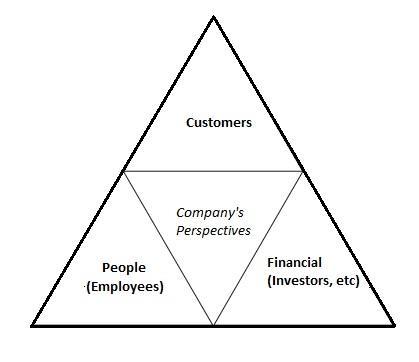
When I am preparing a presentation for senior leadership, I run my content through three filters before I walk in.
Customers. How does this affect the people who buy from or rely on the company? Does it improve their experience, reduce friction, or protect something they value? Customer impact is almost always high-signal for leadership.
People. How does this affect internal teams, employees, or contractors? Does it change how people work, remove a bottleneck, or create new capacity? People concerns tend to surface especially in COO and operations-focused conversations.
Financial. What does this cost, save, or risk? Investors, lenders, and the finance function want to see that you have thought about return. You do not need a detailed ROI model for every conversation, but you need a credible number and a defensible assumption behind it.
You do not always need to address all three equally. But you should know which lens matters most to the specific executive in the room, and make sure your story speaks to it. A CTO will lean toward people and systems. A CFO will lean toward financial impact. A CEO often wants to see all three.
The triangle below captures this well. The company sits at the centre, and any significant initiative you bring to the executive table is touching at least one corner, often more than one.
Tell a Story, Not a Briefing
Structure your content as a narrative. The simplest version is this: here is what is happening, here is why it matters, here is what I propose, here is what I need from you. That four-part structure will serve you in most executive contexts.
Avoid technical jargon unless your audience has explicitly asked for it. Not because executives are not smart enough for technical depth, but because they are evaluating a business decision, not a technical implementation. Give them the level of detail that serves the decision in front of them, and save the deeper technical conversation for the right follow-up with the right people in the room.
Be Direct About the Ask
End with a clear ask. You would be surprised how many presentations omit this entirely.
You have just walked the leadership team through a problem and a proposal. Now tell them what you need. Do you need a budget approved? A decision made? A sponsor to remove a blocker? Say it plainly. Executives are accustomed to being asked directly for things. Ambiguity at the close of a presentation wastes the work you just did.
If there are open questions you cannot answer yet, acknowledge them and describe how you will address them. That kind of honesty builds more credibility than pretending you have every detail locked down.
Handling Questions and Pushback
Q&A is where a lot of developers lose the room, not because they do not know their material, but because they are not prepared for how executives ask questions.
Executive questions are often not really questions. They are tests. A CFO asking “what happens if this takes twice as long?” is not confused about project timelines. They are probing whether you have thought through the risk. A CEO asking, “Have you talked to the team about this?” wants to know if you have built any alignment before bringing it to them.
The best thing you can do is treat every question as a legitimate concern, not a challenge to your credibility. A few principles that will serve you well:
Answer the question that was asked. Not the question you wish they had asked, and not the longer version of the answer you already gave. If someone asks for a number, give the number first, then the context. If you bury the direct answer in a paragraph of qualification, you will lose them.
It is acceptable not to know. If you do not have an answer, say so directly: “I don’t have that number in front of me, but I will get it to you by the end of the day.” Then actually do it. Fabricating an answer in an executive meeting is one of the fastest ways to permanently damage your credibility.
Do not get defensive. This is harder than it sounds. You have probably spent weeks on whatever you are presenting, and it can feel personal when someone pokes a hole in it. The executive is not attacking you. They are doing their job, which is to stress-test decisions before committing to them. Welcome it.
Pushback is not a no. When an executive challenges your proposal, that often means they are engaged enough to care. A flat dismissal is the end of the conversation. Pushback is an invitation to address a concern. Understand what is actually driving the objection, address it directly, and stay in the conversation.
One final thing: remember that the person across the table from you is not some elevated authority figure with perfect judgment. They have opinions, biases, and gaps in their knowledge just like anyone else. Your job is not to perform for them. It is to communicate clearly and help them make a good decision with the information you have. You know the material better than anyone else in that room.
Wrapping it Up
Presenting to executives is a skill, and like any skill it gets easier the more you do it. But the foundation never changes: know your purpose, lead with the problem, frame everything through the business lens, and make a clear ask.
Calibrate your content to your audience. The higher the room, the less they want to hear about how the sausage is made. They want to know why it matters and what it is going to cost or return. Give them that, and you will hold their attention.
When the questions come, stay grounded. You know the material. You were put in that room for a reason. Answer directly, acknowledge what you do not know, and treat pushback as part of the process rather than a verdict on your work.
The developers who get remembered in those rooms are not the ones who gave the most polished presentation. They are the ones who came in with a clear point of view, communicated it honestly, and made it easy for leadership to say yes.
Wrapping it Up
Presenting to executives is a skill, and like any skill it gets easier the more you do it. But the foundation never changes: know your purpose, lead with the problem, frame everything through the business lens, and make a clear ask.
Calibrate your content to your audience. The higher the room, the less they want to hear about how the sausage is made. They want to know why it matters and what it is going to cost or return. Give them that, and you will hold their attention.
When the questions come, stay grounded. You know the material. You were put in that room for a reason. Answer directly, acknowledge what you do not know, and treat pushback as part of the process rather than a verdict on your work.
The developers who get remembered in those rooms are not the ones who gave the most polished presentation. They are the ones who came in with a clear point of view, communicated it honestly, and made it easy for leadership to say yes.